Many modern ISO management system standards include a Context of the Organization (COTO) clause, and the core principle remains mostly consistent across standards. That said, similar clauses do not always translate into identical challenges.
How Context of the Organization Can Differ Across ISO 45001 Auditing, Implementation, and Consulting Roles
As you may remember from our previous posts about COTO in the context of ISO 9001 and ISO 13485, differences in objectives, regulatory expectations, risk considerations, interested parties, and system scope can influence how COTO is interpreted, implemented, audited, and advised upon in practice.
As a result, examining COTO through the lens of a specific ISO standard or role can uncover underlying issues when viewed at the clause level alone. The sections below explore these perspectives in more detail, highlighting how the same concept can vary in complexity and application depending on the context in which it is used.
Context of the Organization from an ISO 45001 Internal Auditor Perspective
ISO 45001 auditors often come across Context of the Organization as something that is expected to be clearly documented and aligned with occupational health and safety risks. In practice, though, it’s not always easy to tell whether that documentation really reflects what’s happening on the shop floor or in the field.
Even when procedures describe internal and external issues, stakeholders, and scope, the real test is whether those descriptions actually line up with workplace realities such as machinery interaction, manual handling, chemical exposure, contractor activities, or other conditions that may influence hazard identification, risk assessment, and compliance with applicable workplace safety requirements.
What often happens is that the context documentation looks complete on paper, but stays at a fairly general level.
For example, hazards might be mentioned as part of the system, but without really showing how they connect to specific day-to-day situations like maintenance shutdowns, confined space entry, working at height, or subcontracted activities happening alongside internal teams.
This is usually where the gap starts to appear, between what the system says is happening and how work is actually done under Occupational Health & Safety (OH&S) conditions.
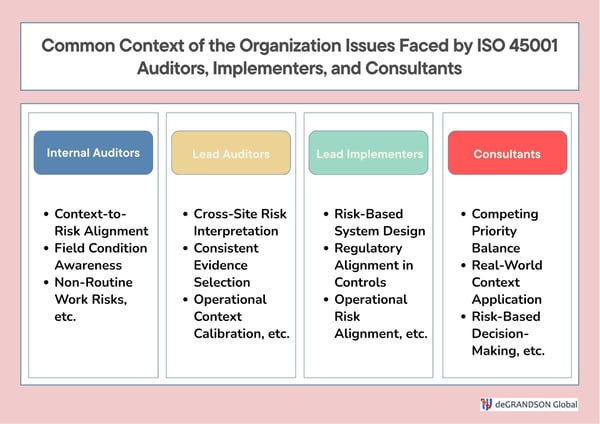
For internal auditors, the challenge is that this is not something that shows up neatly on a checklist. Instead, it requires picking up on whether the context has been meaningfully carried through into real risk scenarios, such as non-routine work, changing site conditions, or coordination between employees and contractors sharing the same workspace.
Over time, the key skill becomes learning to separate documentation that simply ticks the structural requirement from context that actually reflects how safety risks behave in practice.
Context of the Organization from an ISO 45001 Lead Auditor Perspective
For lead auditors in ISO 45001, Context of the Organization becomes less about whether it exists on paper and more about how consistently it is interpreted and applied across different auditors, sites, and operational environments.
Even when an organization has a clearly defined OH&S context, what really matters is how that context is used in practice when planning and running audits.
For example, in multi-site or multi-process environment, one site might naturally frame its context around contractor-heavy work and mobile activities like maintenance teams moving between client locations, while another can focus more on machinery safety, confined space risks, or environmental conditions such as heat exposure or noise levels.
The context is still “the same” at a formal level, but the way it is understood can start to shift depending on who is applying it. When that happens, the impact usually shows up in audit execution.
Audit planning, evidence selection, and even how findings are interpreted can start to drift slightly between sites, simply because the underlying understanding of “context” isn’t being applied in a fully consistent way.
One audit might go deeper into contractor control and permit-to-work systems, while another might lean more heavily into equipment guarding or incident reporting trends.
For lead auditors, this makes the challenge a bit more subtle than straightforward verification. It becomes not just about checking that context is defined, but making sure it’s actually reflected in how the scope of the audit is defined, how evidence is gathered from things like toolbox talks, risk assessments, or shift handovers, and how conclusions are formed.
Without that consistency, audit outcomes can end up feeling slightly fragmented, with different parts of the organization being assessed through subtly different interpretations of what OH&S context actually means in practice.
Context of the Organization from an ISO 45001 Lead Implementer Perspective
When implementing ISO 45001, Context of the Organization is less about interpretation during an audit and more about how it gets built into the structure of the occupational health and safety management system (OHSMS) from the start.
The challenge is that real operational environments are often more complex than formal system structures suggest. Work may take place across multiple locations and under changing site conditions.
For example, there can be subcontracted maintenance teams, rotating shift patterns, or mixed responsibility for equipment and site safety. If context isn’t translated accurately into system design, the OHSMS can still look compliant on paper while not fully reflecting actual risk exposure.
This often shows up in systems where risk assessments exist, but don’t fully connect back to contextual realities like varying exposure conditions, workforce turnover, or environmental constraints such as heat stress, noise, or confined workspace limitations.
The implementer’s role is therefore not just to define context, but to ensure it meaningfully shapes hazard identification, risk assessment, and operational controls, while also aligning with the workplace safety regulations that influence how the OH&S system is designed and operated.
Context of the Organization from an ISO 45001 Consultant Perspective
For consultants in ISO 45001, Context of the Organization is rarely something that exists as a single, shared definition inside an organization. More often, it sits at the point where different views of operational reality meet and don’t always line up neatly.
Even when leadership, operations, and safety functions all agree that “context has been defined,” they’re not always working from the same assumptions about what that actually covers or what matters most within it.
Because of this, context ends up being less of a fixed input and more of a space where different perspectives overlap and sometimes quietly pull in different directions.
Leadership might describe it in terms of strategy, compliance expectations, and business direction, while operations are usually thinking about workload, resource limits, production pressure, and delivery constraints.
Safety functions, on the other hand, tend to focus on hazard exposure and day-to-day risk control like in manual handling, equipment interaction, or contractor activity on shared sites.
These aren’t just different viewpoints; they can be slightly different ways of describing the same working environment. The tricky part in consulting is that these differences often aren’t obvious at first. Context can be formally documented and agreed, but still interpreted differently depending on the function.
A big part of the consultant’s role in ISO 45001 is working through those differences to shape context that remains usable in practice, even when competing operational priorities are involved.
This often means balancing productivity demands, contractor flexibility, and the need to maintain effective risk controls under changing workplace conditions, so that context can still support practical decision-making within real OH&S constraints.
COTO from the Perspective of Professionals Transitioning from OHSAS 18001 to ISO 45001
For those transitioning from earlier occupational health and safety frameworks like OHSAS 18001 to ISO 45001, Context of the Organization often represents a noticeable shift in how the entire system is understood.
Under OHSAS 18001, hazards were typically identified and managed within relatively defined operational boundaries, with a stronger emphasis on procedures and established controls. By contrast, those boundaries become more sensitive to the conditions in which work is actually carried out in ISO 45001.
This can mean that the same task may need to be assessed differently depending on factors such as permit-to-work conditions not fully matching field execution, breakdowns in shift handovers, simultaneous operations occurring in the same area, or changes in job scope once work has already started.
The shift then becomes less about reclassifying context itself and more about ensuring that the actual conditions of the work are taken into account when determining how those hazards should be controlled.
Navigating ISO 45001 COTO Issues with Structured Training
While many of these challenges only become visible during real-world implementation or auditing, structured training can help professionals recognize them earlier by turning what is often learned informally into something more deliberate and repeatable.
When combined with applied examples,scenario-based exercises, and real operational situations, structured training can help professionals see how the same concept can lead to different decisions depending on the role, context, and level of responsibility involved.
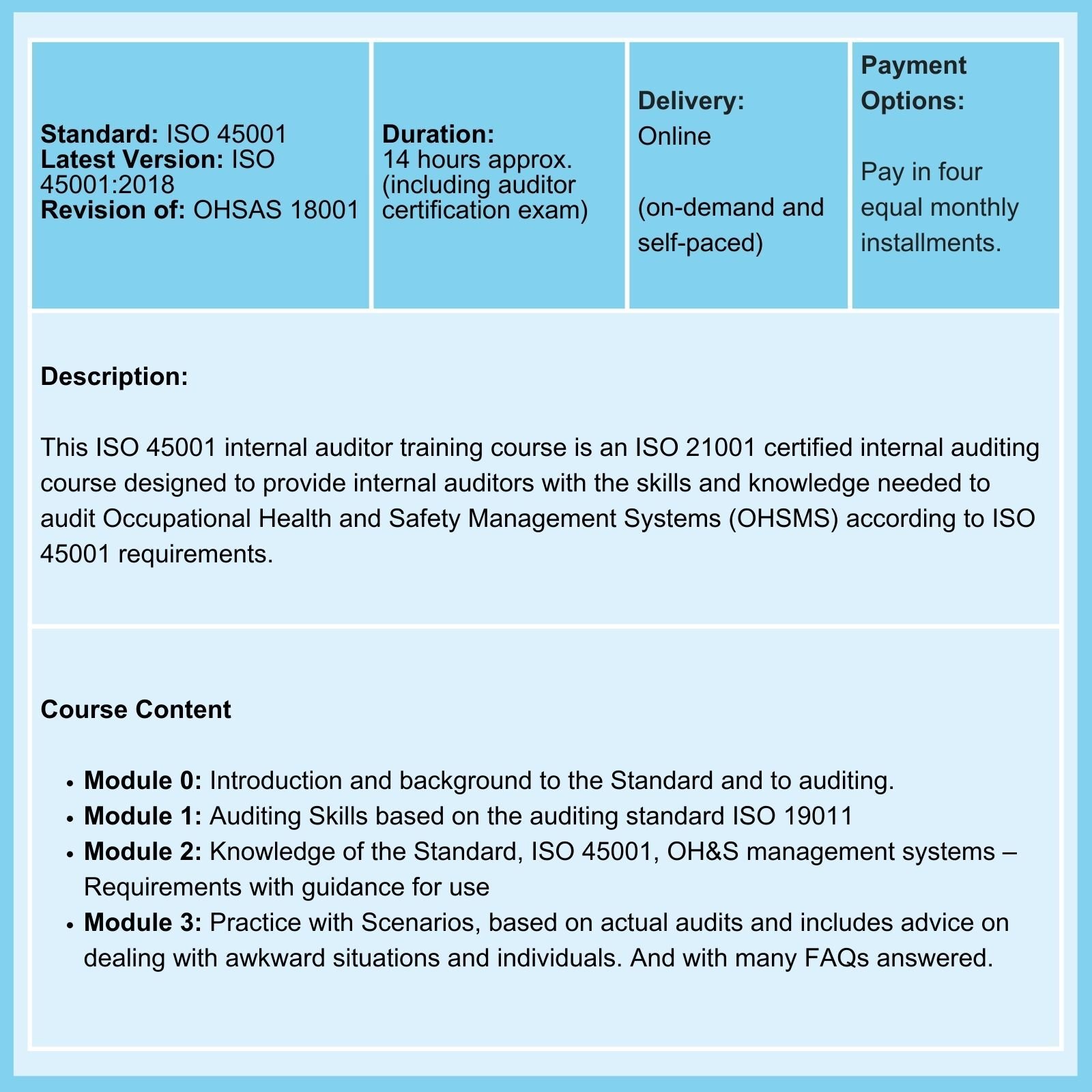
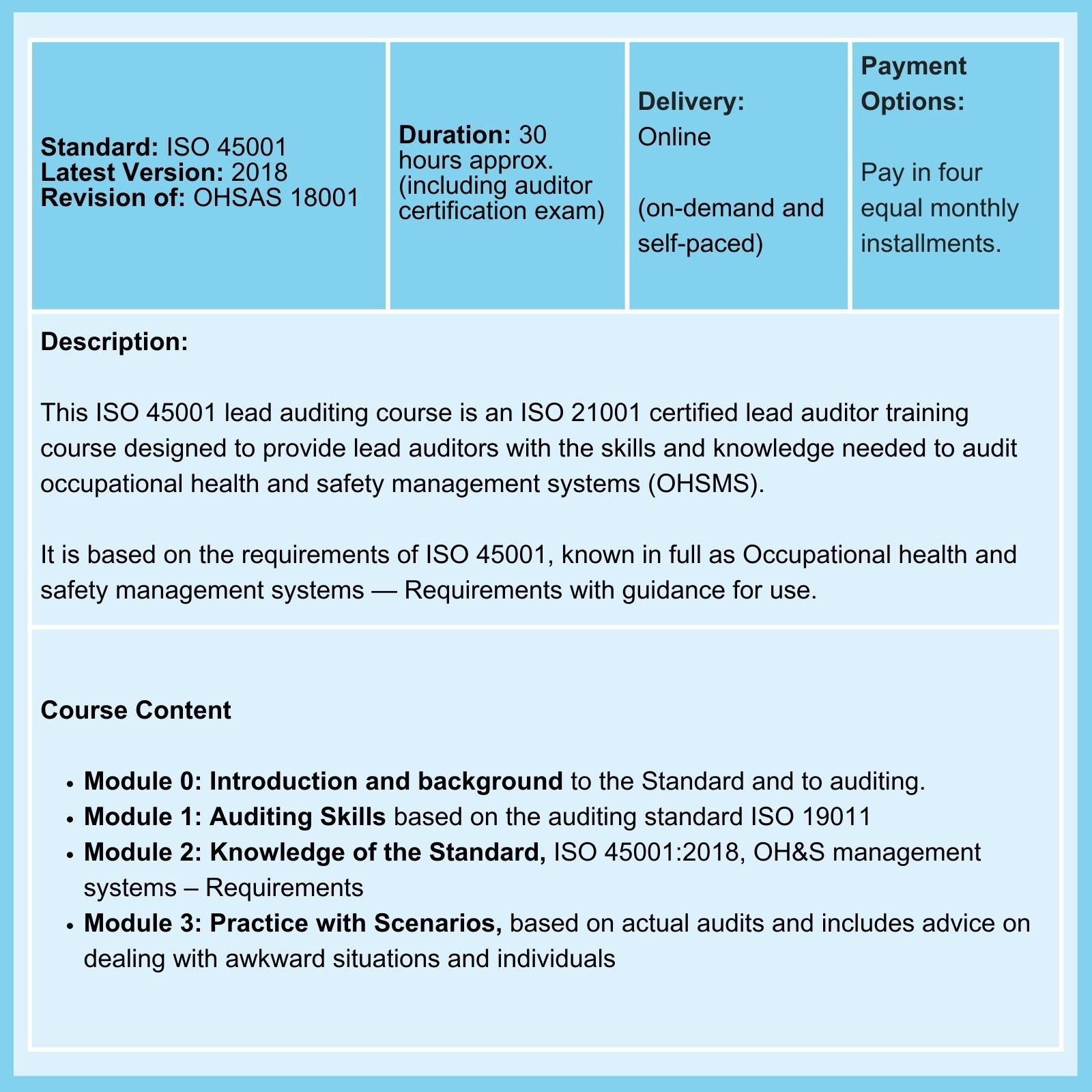
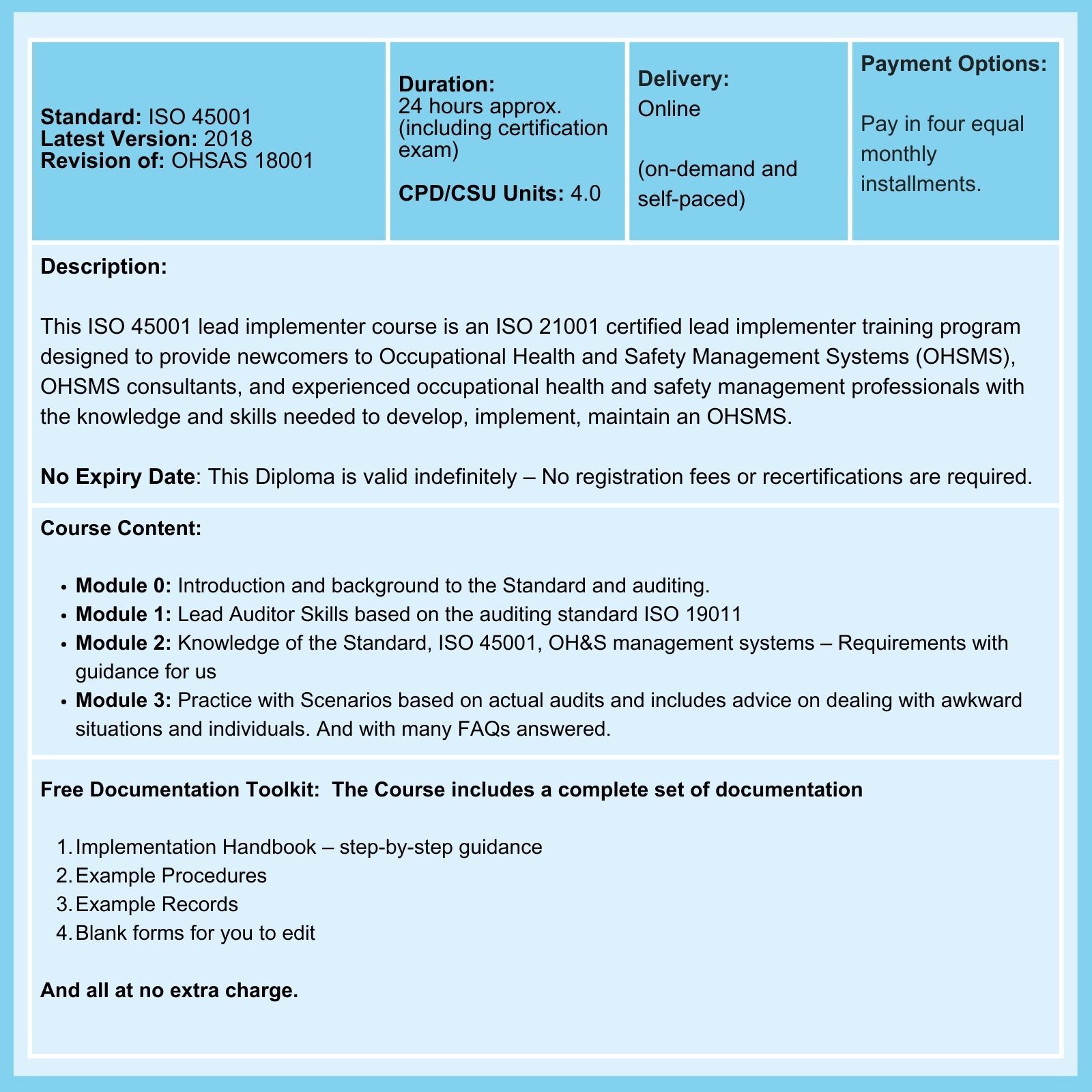
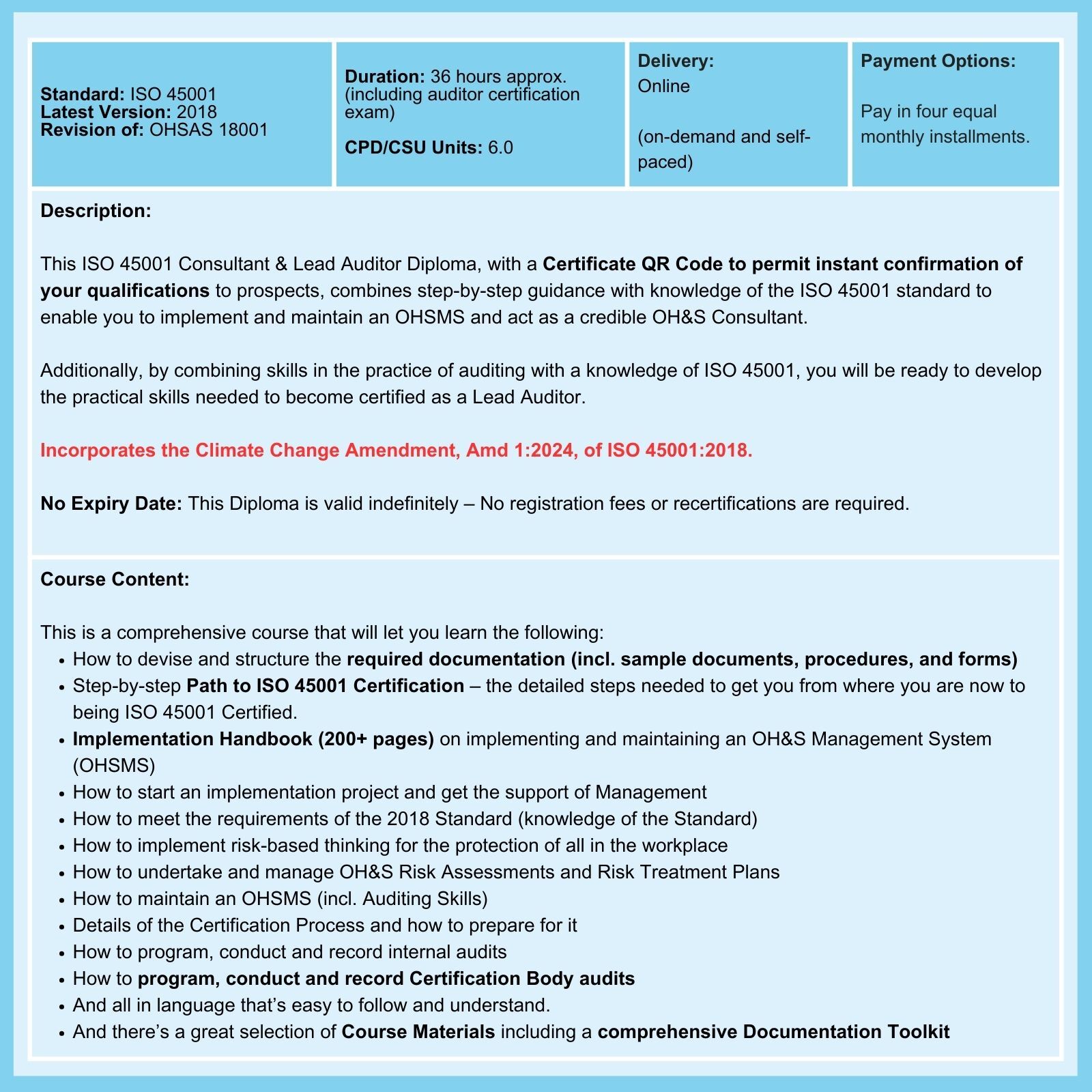
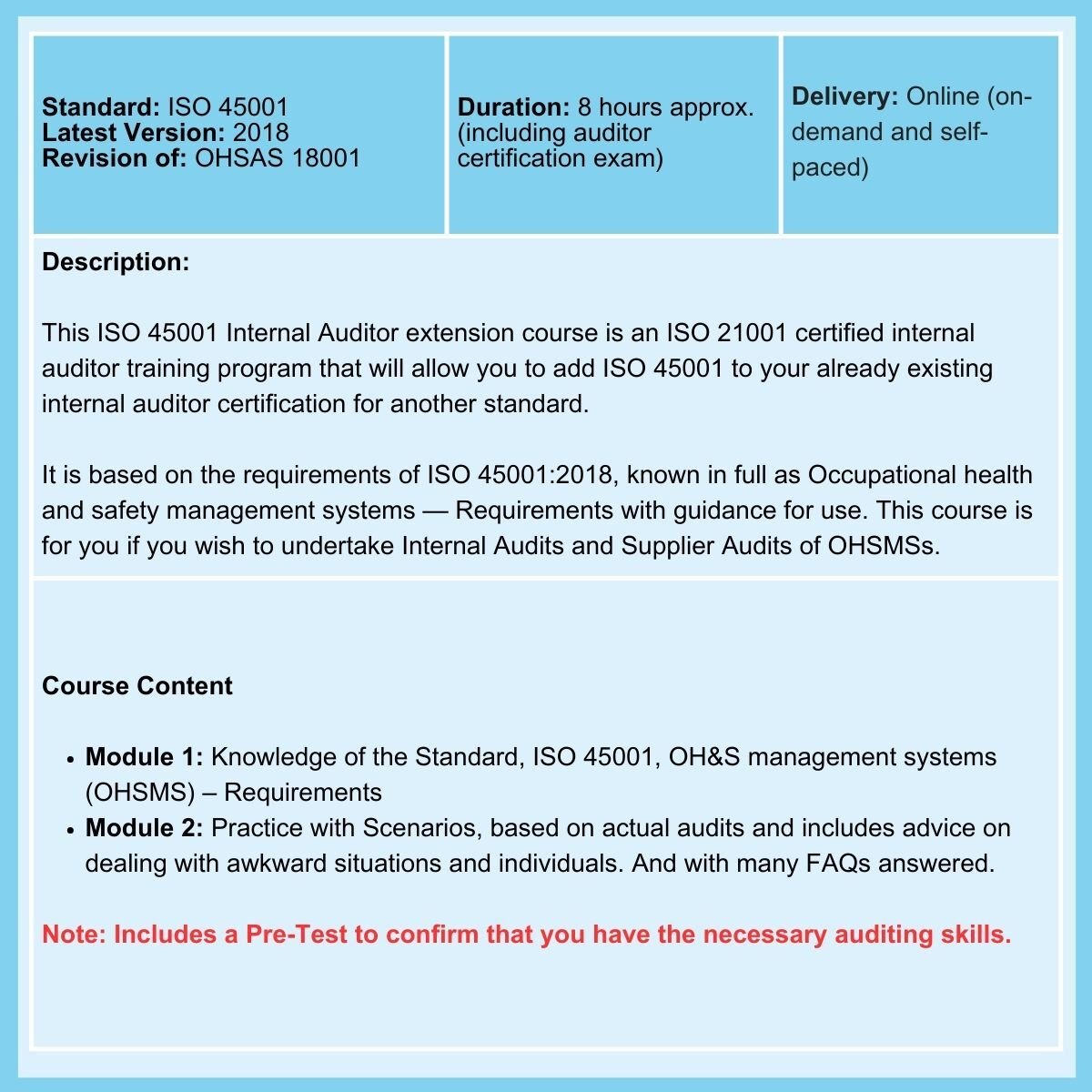
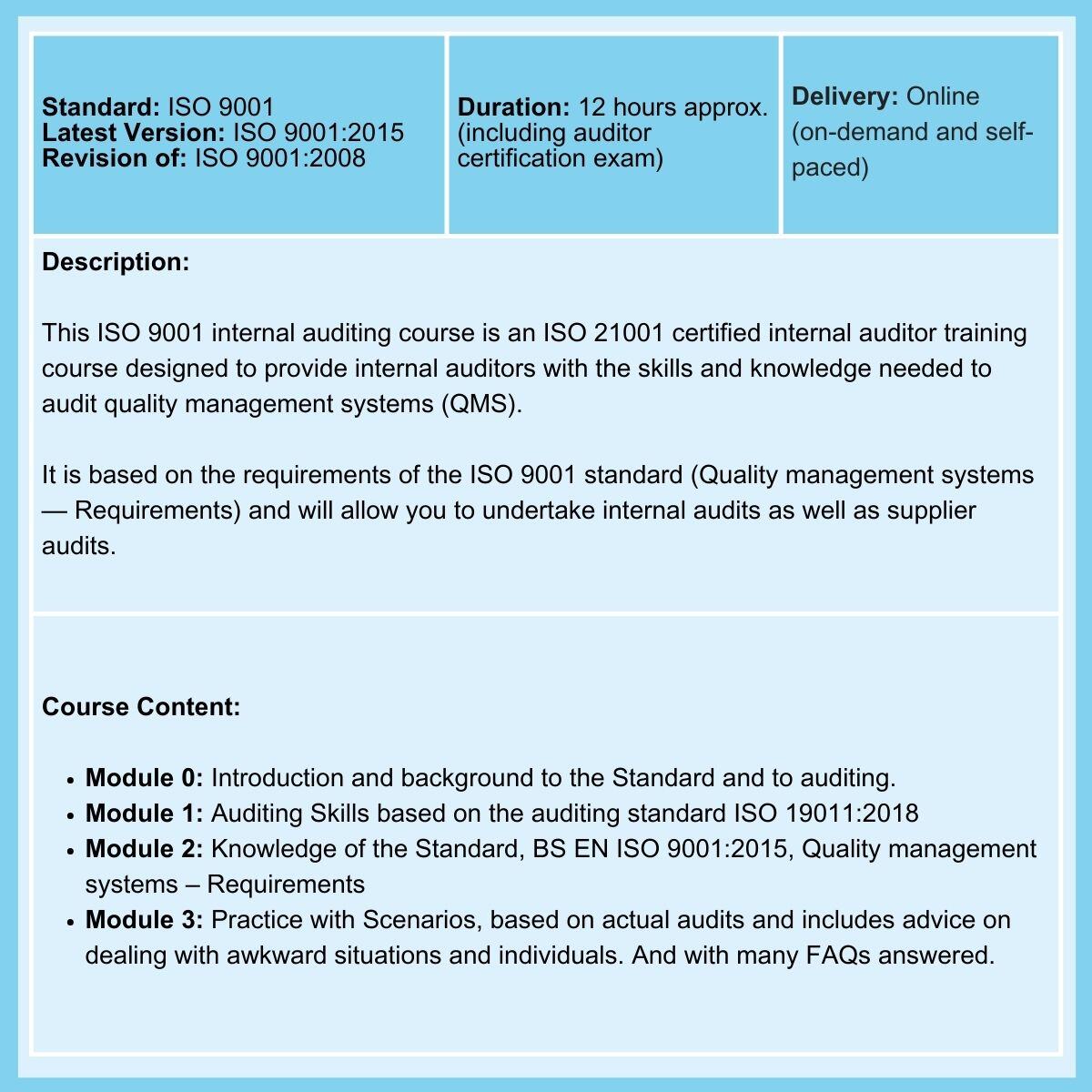
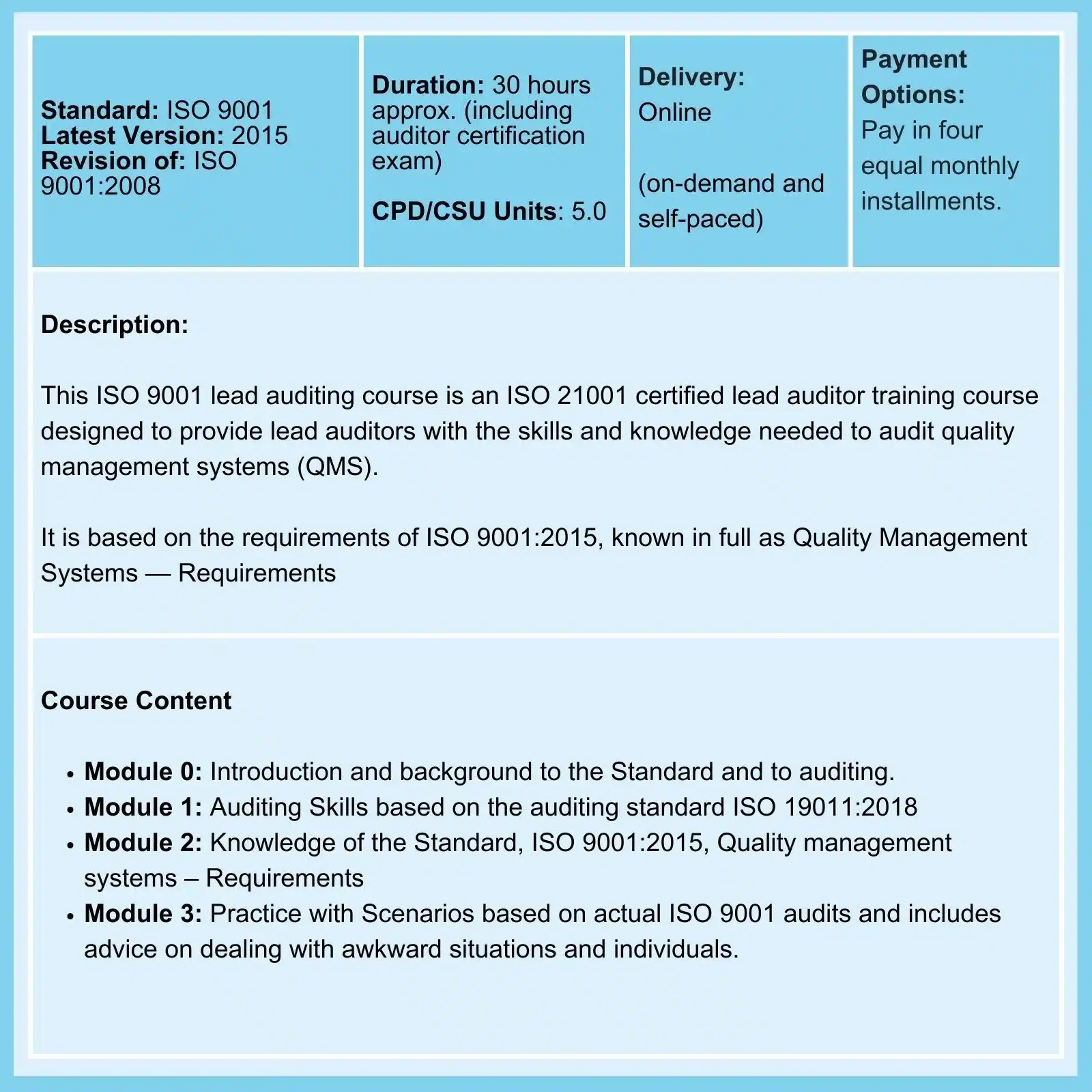
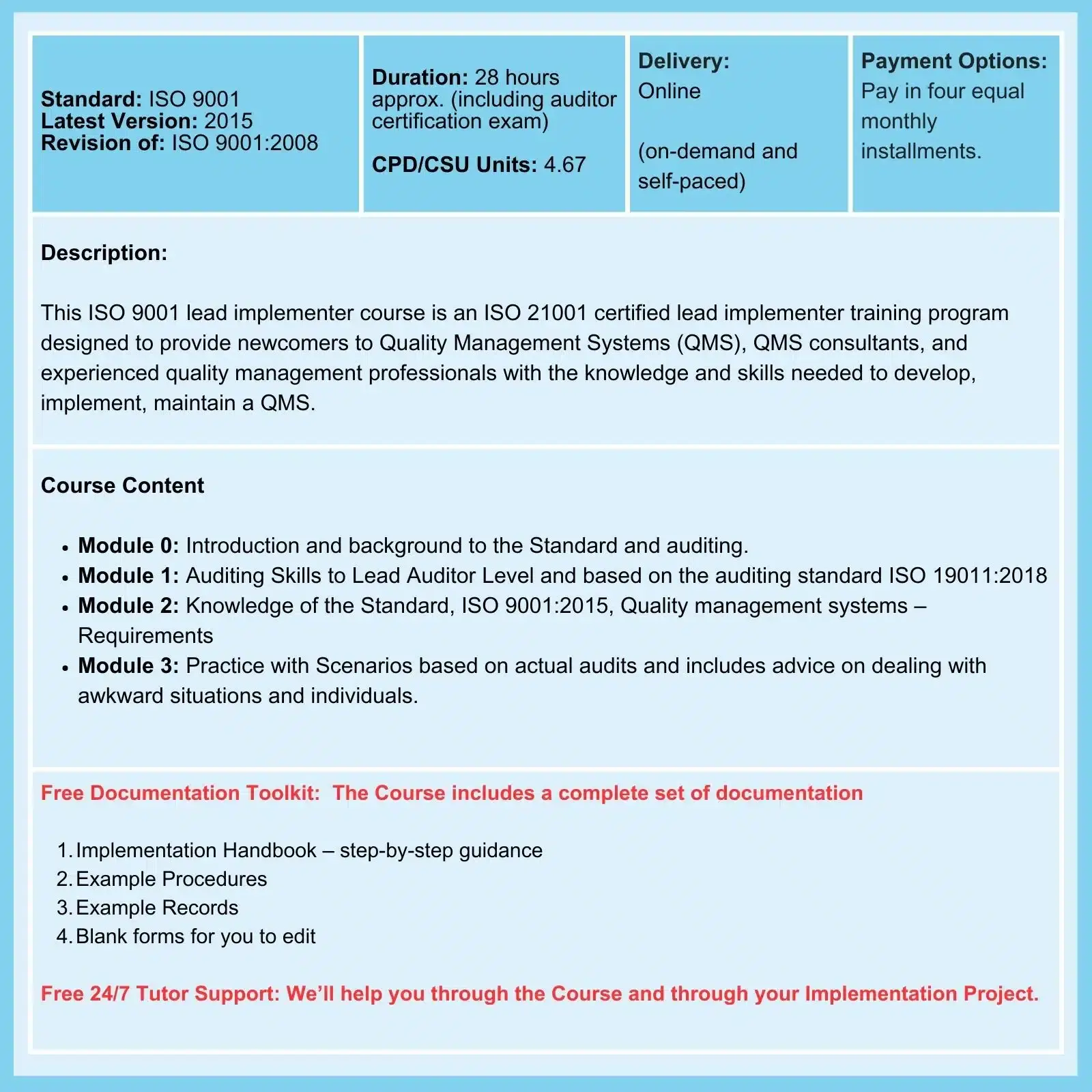
If you or your organization are looking to develop these capabilities in a more formal way, there are dedicated courses designed for each role along with additional tools and resources to help learners compare course types and identify the training option that best suits their current responsibilities, experience level, or career goals if they are unsure where to begin.
Related Courses